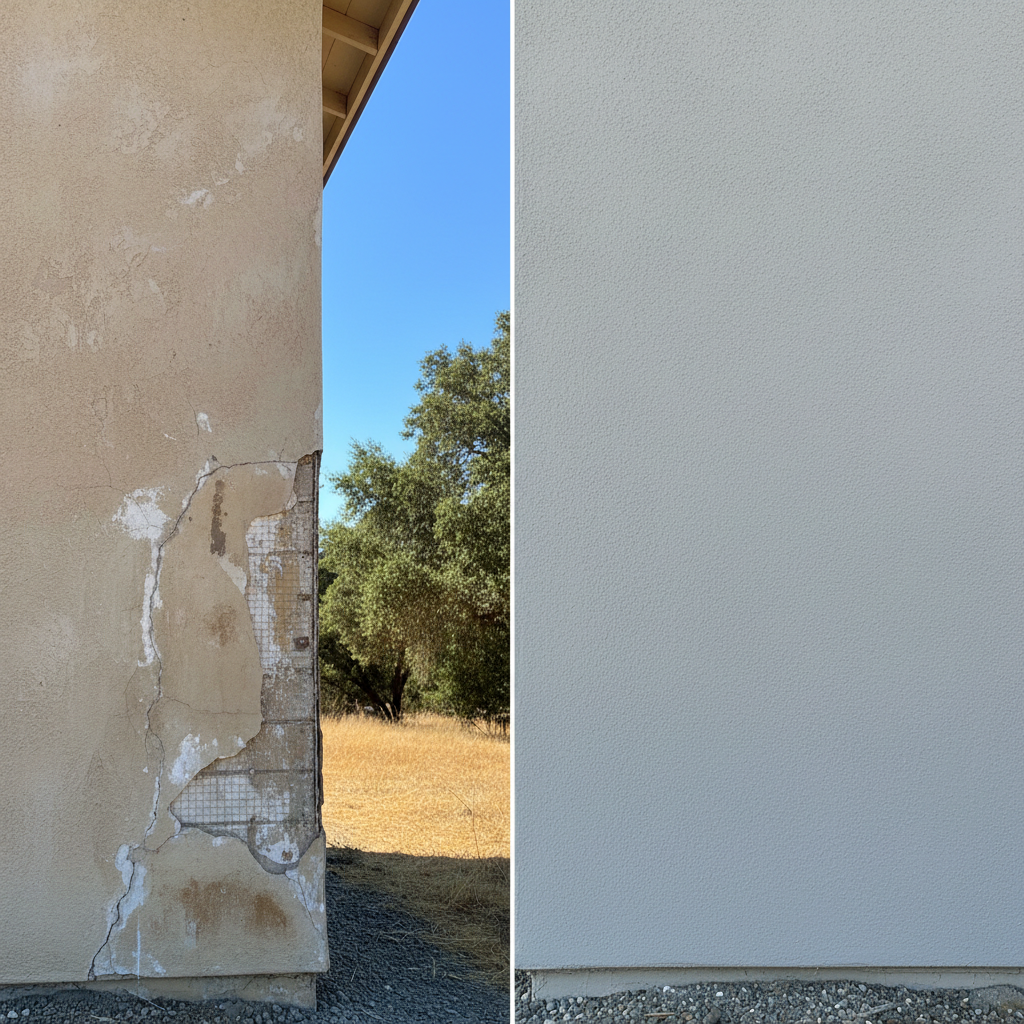
So, you’re thinking about stucco for your house, maybe a brand-new build or a big renovation. Good choice, really; it’s a classic look that holds up great here in Oakland. But then you start digging a little, and suddenly there’s 'traditional three-coat' and 'modern one-coat' or 'two-coat' systems. What’s the real story? Which one’s actually right for you? Let’s just cut through all the jargon, shall we?
What's the Real Difference?
When I talk about traditional stucco, I mean the old-school, three-layer process. You start with a scratch coat, then add your brown coat, and finally, the finish coat goes on top. Each layer gets applied, cures, and then you have a solid, thick, durable shell. It’s been around for ages for a reason, you know?
Modern stucco systems, sometimes called 'one-coat' or 'two-coat' (even though they might still have multiple layers, just fewer cement-based ones), are a bit different. They typically use a special mix that includes synthetic additives, often fiberglass mesh, and we apply them in fewer, thicker passes. The whole idea is to get the job done quicker with less material, all while still giving you that stucco look.
Cost: What You Pay Now vs. What You Pay Later
This is usually the first thing people ask about, naturally. Generally speaking, modern stucco systems can have a lower upfront installation cost. Fewer layers mean less labor time on site, and sometimes the material itself is designed for quicker application. So, if you’re just looking at the initial bid, modern might seem like the cheaper option.
Traditional stucco, with its three distinct layers and longer curing times between coats, definitely takes more labor. That usually means a higher initial price tag. But here’s the kicker, and it’s a big one: traditional stucco, when we do it right, is incredibly durable. We’re talking decades, even a century, with proper care. It’s a proven system. That long lifespan can actually make the higher upfront cost a better value in the long run, especially if you plan on staying in your Oakland home for a while.
Durability: Built to Last vs. Built for Efficiency
This is where my experience really shines. Traditional stucco is thick, dense, and hard. It’s got a lot of mass, you know? That makes it incredibly resistant to impact damage. You hit it with a baseball? It’s probably fine. It also handles our local weather patterns – those hot, dry summers followed by wet winters – really well because it breathes and manages moisture effectively. I’ve seen traditional stucco homes in the Oakland Hills that are 80 years old and still look fantastic with just a little maintenance. Amazing, right?
Modern systems are often thinner and rely on those synthetic additives for strength and flexibility. They can be more prone to impact damage because they don't have the same mass. While they're designed to be flexible, which can be good for minor building movement, they sometimes don't stand up to the test of time quite as well as traditional methods. If moisture gets behind a modern system that wasn't installed perfectly, it can sometimes be harder to detect and fix because of how the layers are designed.
Maintenance: What You'll Be Doing Later On
Both types of stucco need maintenance; don't let anyone tell you otherwise. But the kind of upkeep can differ. For traditional stucco, it's mostly about keeping it clean, watching for hairline cracks (which are normal and easy to patch), and repainting every 10-15 years. If you get a bigger crack, it's usually straightforward to repair because the material is consistent all the way through.
With modern systems, you’ll still clean and paint, sure. But if you get a crack or damage, the repair can sometimes be a bit trickier to blend smoothly, especially if the underlying layers are different compositions. Because they’re often thinner, any damage can potentially compromise the system’s integrity faster. You’ve got to be diligent about sealing any penetrations around windows and doors with both, but it’s especially critical with modern systems.
Appearance: How It Looks and Feels
This is subjective, of course, but there's a definite difference. Traditional stucco has a very natural, organic feel. The thickness allows for deeper textures and a more substantial look. It’s got that classic, timeless Mediterranean or Spanish Colonial vibe that you see all over the Bay Area.
Modern stucco can mimic many of those textures, but sometimes it can look a little flatter or less 'deep' because it’s applied in fewer, thicker passes. The color can be integrated into the finish coat, just like traditional, giving you a consistent look. It’s still stucco, and it still looks good, but if you’re truly going for that authentic, rich texture, traditional often wins out.
My Recommendation for Oakland Homeowners
Look, I’m not going to tell you one is inherently 'bad.' Both have their place, absolutely. But if you’re asking me, for a homeowner in Oakland who wants a long-lasting, durable exterior that can handle our climate and look fantastic for decades, I’m going to lean towards traditional three-coat stucco every single time.
Yes, it costs a bit more upfront. But you’re investing in a system that has proven its worth for generations. It’s tougher, easier to repair in the long run, and just has that authentic look and feel that you can’t quite replicate with modern shortcuts. When Oakland Stucco & Plastering does a traditional stucco job, we know it’s going to stand the test of time. It’s a solid investment in your home’s future.
Think about it like this: you wouldn't skimp on the foundation of your house, right? Stucco is your home’s skin, its first line of defense. Go with the proven method, and you won’t regret it.